How to design a home environment that supports independence, confidence, and purposeful learning.
A Montessori education doesn’t end when a child leaves the classroom. In fact, the home plays an essential role in reinforcing the independence, curiosity, and responsibility that Montessori nurtures. Parents often find that once they understand the principles behind the Montessori prepared environment, they can transform everyday routines into meaningful learning opportunities. A Montessori-friendly home setup is not about buying expensive materials or recreating a classroom. Instead, it is about creating a thoughtful, child-centered space where children feel capable, supported, and encouraged to explore. Establishing a Montessori home setup allows for a more enriching environment.
At KV Montessori, families regularly ask how they can extend the Montessori philosophy into their home life. The answer is simple: by respecting the child’s developmental stages and preparing an environment that meets their needs. Whether you live in a small apartment or a spacious home, a Montessori-inspired setup allows your child to participate more fully in family life and discover joy in daily activities.
Creating a Montessori-friendly home begins with understanding how children learn: through movement, hands-on engagement, and meaningful participation. With a few intentional adjustments, your home becomes a place where your child can grow in confidence and independence.
By establishing a Montessori home setup, parents can ensure their children thrive in an environment designed for learning and exploration. This Montessori home setup is a vital aspect of fostering a child’s development.
“A Montessori home is not about perfection or aesthetic. It is about giving children the freedom and tools to say, ‘I can do it myself.'”
Start With the Child’s Perspective
The foundation of a Montessori home comes from viewing the environment at your child’s level. Children thrive when they can see, reach, and use the tools around them. Simple changes like lowering hooks, placing dishes on reachable shelves, and providing furniture sized for small hands help children feel included and capable.
Think of each room as a place where your child can participate:
- In the living room, provide a small shelf with a few important toys or books.
- In the kitchen, designate a drawer for child-safe dishes and utensils.
- In the bathroom, add a stool so your child can reach the sink independently.
These subtle shifts encourage independence and reduce frustration. When children do not need constant adult assistance for basic tasks, their confidence naturally increases.
Create Order and Predictability
Montessori emphasizes order because it helps children feel calm, secure, and in control. A Montessori-friendly home includes thoughtfully organized spaces where each item has a designated place. This makes it easy for children to find what they need—and just as importantly, to put things away when finished.
You can support the order by:
- Using low shelves instead of toy bins
- Rotating toys to prevent clutter
- Keeping only a few materials available at once
- Offering beautifully arranged trays or baskets
When children maintain their space, they develop responsibility and pride. A tidy environment also reduces distractions, allowing deeper concentration during play or learning.
Choose Purposeful, High-Quality Toys and Materials
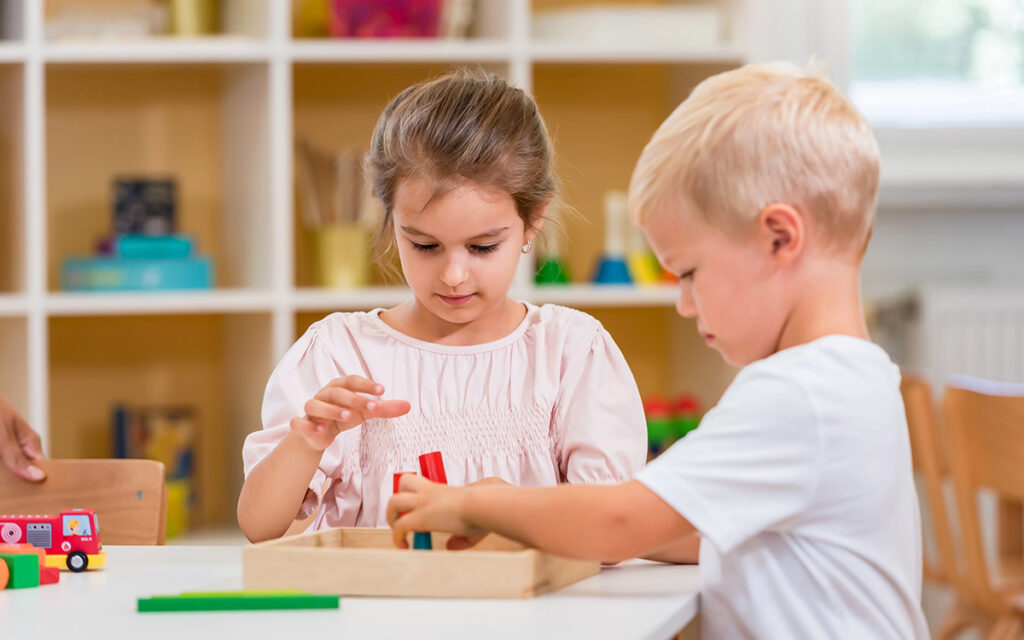
Montessori materials are known for being simple, beautiful, and educational. You do not need official Montessori materials at home, but selecting toys that support problem-solving, creativity, and real-world learning makes a difference.
Examples of Montessori-aligned toys include:
- Wooden puzzles
- Building blocks
- Object permanence boxes
- Practical life tools like pitchers, child-safe knives, or brooms
- Real-world replicas such as animal figurines
- Art materials that allow open-ended creativity
Avoid overly noisy or flashy toys that entertain rather than engage. Montessori materials encourage children to think, explore, and discover through their own efforts.
Encourage Practical Life Activities
Practical life skills are a core part of Montessori learning, and the home is the best place for children to practice them. Whether it’s preparing snacks, watering plants, or helping with laundry, these everyday tasks teach independence, coordination, and responsibility.
You can incorporate practical life into your home by:
- Creating a child-sized cleaning station
- Offering child-safe utensils for food preparation
- Setting up a small plant-watering area
- Letting your child help fold towels or set the table
Children naturally want to imitate adults and contribute to real work. Practical life activities satisfy this desire while strengthening motor skills, focus, and confidence.
Promote Independence in Daily Routines
Montessori encourages children to take ownership of simple tasks, such as dressing, brushing teeth, and preparing snacks. These routines support independence and give children a sense of control over their day.
Helpful home modifications include:
- A low hook and shelf for coats and shoes
- A dressing area with accessible clothing choices
- A snack drawer or fridge section where children can make simple food choices
When children can complete tasks independently, they develop resilience and a strong sense of capability.
Design Spaces That Encourage Calm and Concentration
A Montessori home setup includes areas dedicated to quiet focus and creative exploration. These spaces do not need to be large—even a small table in a corner can become a place for reading, puzzles, writing, or art.
Key elements of a focus-friendly space include:
- Minimal visual clutter
- Natural lighting when possible
- Comfortable seating
- A few carefully selected activities
Children often surprise parents with how long they can concentrate when given a calm, inviting space.
Use Natural Materials Whenever Possible
Montessori homes often incorporate natural materials such as wood, cotton, wool, metal, and glass. These offer rich sensory experiences and help children understand weight, temperature, and texture. Natural materials are durable, aesthetically pleasing, and tend to encourage more meaningful engagement.
While perfection is not necessary, incorporating natural items where possible adds warmth and authenticity to the home environment.
Conclusion: A Montessori Home Is Built on Respect and Intentionality
Creating a Montessori-friendly home is not about buying specific materials or transforming your house into a classroom. It is about preparing an environment that respects your child’s capabilities and invites them to participate in daily life with confidence and joy.
When parents thoughtfully adjust the home to support independence, children flourish. They develop problem-solving skills, patience, self-reliance, and a sense of belonging. With each small step—pouring water, choosing clothes, cleaning up, or preparing a snack—children discover the empowering truth at the heart of Montessori philosophy: “I can do it myself.”