Discover how Montessori education benefits children develop independence, self-esteem, problem-solving skills, and confidence through hands-on learning and personalized guidance.
Confidence is one of the most important qualities a child can develop during the early years of life. It influences how they approach challenges, interact with peers, express themselves, and build a foundation for future success. While every child develops confidence differently, the educational environment they experience plays a major role in shaping how they see themselves and their abilities.
For many families exploring early childhood education, confidence is often one of the most significant priorities. Parents want their children to feel secure, capable, and excited about learning rather than fearful of failure or overly dependent on constant reassurance. This is one reason why Montessori education continues to stand out among early learning philosophies. Instead of focusing solely on academic milestones, Montessori education nurtures the whole child, supporting emotional growth, independence, responsibility, and self-belief from an early age.
At KV Montessori, children are encouraged to explore, learn, and grow at their own pace in a carefully prepared environment designed to build trust in their abilities. Rather than rushing children through lessons or placing pressure on performance, Montessori classrooms help early learners gain confidence naturally through experience, repetition, and achievement.
Understanding the Montessori education benefits can help parents make informed choices about their child’s learning journey.
“Confidence in young children grows when they are trusted to try, explore, and solve problems independently.”
Confidence Begins With Independence
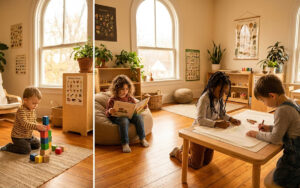
One of the core principles of Montessori education is independence. From the earliest stages of learning, children are encouraged to complete tasks on their own whenever possible. This may include simple activities such as pouring water, organizing materials, cleaning up after themselves, selecting work independently, or completing classroom activities without constant adult intervention.
At first glance, these may seem like small accomplishments. However, for a young child, independently completing meaningful tasks creates a powerful sense of achievement. Each success reinforces the belief that “I can do this,” which gradually becomes part of how they see themselves. The Montessori education benefits children by instilling this confidence early on.
Traditional educational settings sometimes unintentionally limit independence by relying heavily on teacher-led instruction, strict schedules, or excessive correction. Montessori classrooms, by contrast, are intentionally structured to give children appropriate freedom within clear boundaries. Instead of adults immediately stepping in to solve problems, teachers often allow children time to think critically and attempt solutions themselves.
This process helps children become resilient learners. Rather than fearing mistakes, they begin to understand that learning is a journey that includes trial and error. Confidence develops not because everything comes easily, but because children realize they are capable of working through challenges.
For example, if a child struggles with a puzzle or practical life activity, the Montessori approach encourages observation and gentle guidance rather than immediate correction. The child gains satisfaction from eventually solving the challenge independently, reinforcing self-trust and persistence.
Over time, these repeated experiences of success create children who are more willing to try new things, ask questions, and approach unfamiliar situations with confidence.
Learning at Their Own Pace Builds Self-Esteem
Every child develops differently. Some children learn language quickly, while others excel in motor skills, social interaction, or problem-solving. Unfortunately, traditional classrooms often rely on standardized pacing, where all students are expected to progress through material at roughly the same speed.
When children struggle to keep up or feel pressured to meet expectations before they are developmentally ready, confidence can suffer. Young learners may begin comparing themselves to others or believe they are “behind,” even when their development is perfectly normal.
Montessori education takes a different approach.
In a Montessori classroom, children move through activities according to their readiness and interest. Lessons are individualized, allowing children to repeat activities as often as needed before advancing to new concepts. This creates an environment where success feels attainable rather than stressful.
At KV Montessori, teachers carefully observe each child and introduce lessons based on developmental readiness rather than rigid timelines. This personalized approach helps children feel successful by appropriately challenging them, not overwhelming them.
When children can master skills at their own pace, they begin to trust their abilities. Instead of developing anxiety around learning, they often become more eager to participate and take initiative.
For example, one child may spend weeks refining fine motor skills through practical life activities before feeling ready for more advanced academic work. Another child may quickly grasp early reading concepts and naturally move forward. Both children are supported in ways that honor their individual growth.
This individualized learning process reduces unnecessary pressure while strengthening self-esteem. Children learn that learning is not about competing with others but about improving themselves.
“Children build confidence when learning feels achievable, meaningful, and connected to their own developmental journey.”
Hands-On Learning Encourages Problem Solving
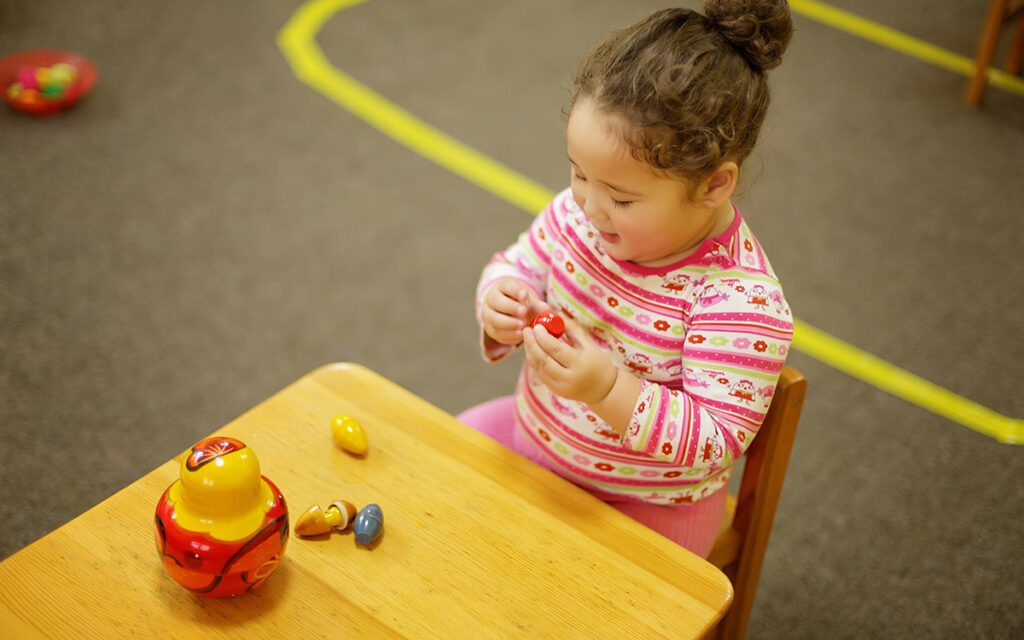
Young children learn best through doing. Hands-on experiences allow children to engage multiple senses, strengthen concentration, and actively participate in the learning process rather than simply observing.
Montessori education emphasizes tactile, experiential learning through specially designed materials that help children understand concepts independently. Whether exploring math, language, science, or practical life activities, Montessori materials are intentionally designed to help children identify mistakes and self-correct without relying solely on teacher approval.
This aspect of Montessori learning is particularly powerful for confidence building.
When children discover answers through exploration rather than having someone tell them what to do every step of the way, they begin trusting their own thinking process. They become active participants in learning rather than passive listeners.
For instance, a Montessori math material may visually demonstrate whether an answer is correct, allowing the child to independently recognize errors and make adjustments. Instead of feeling embarrassed about mistakes, children see them as opportunities to learn.
Hands-on learning also strengthens critical thinking and persistence. Children often spend focused time repeating activities, refining movements, and experimenting with solutions. These experiences help build patience, resilience, and concentration, qualities strongly connected to confidence and academic success.
Practical life activities are another important part of confidence development. Tasks such as preparing snacks, watering plants, caring for classroom materials, or organizing workspaces help children feel capable and responsible. These seemingly simple routines send a powerful message: “You are trusted. Your work matters.”
For young learners, that trust can significantly impact self-confidence.
Respectful Teacher Guidance Builds Emotional Security
The teacher’s role in Montessori education differs greatly from traditional classroom models. Instead of acting as the center of instruction, Montessori teachers guide, observe, and support children while encouraging independence.
This relationship helps foster emotional security, which is essential for healthy confidence.
Children thrive when they feel respected, understood, and emotionally safe. In Montessori environments, teachers often avoid excessive praise or criticism and instead focus on encouraging intrinsic motivation. Rather than hearing constant evaluations like “good job” or “wrong answer,” children are encouraged to reflect on their own progress.
For example, a teacher might say:
“You worked very hard on that.”
“You solved that challenge independently.”
“You kept trying until you figured it out.”
This type of feedback reinforces effort, perseverance, and personal achievement rather than approval-seeking behavior.
Children begin learning that their value does not come solely from pleasing adults or outperforming classmates. Instead, confidence grows internally through mastery, effort, and self-awareness.
At KV Montessori, teachers strive to create supportive environments where children feel comfortable asking questions, exploring new ideas, and expressing themselves freely. Because classrooms emphasize respect and patience, children often feel more secure taking healthy risks and stepping outside their comfort zones.
This emotional foundation is critical during early childhood development, when self-image is still forming.
Social Growth Helps Children Feel More Confident
Confidence extends beyond academics. A child who feels socially capable often experiences greater overall self-esteem and emotional well-being.
Montessori classrooms naturally encourage social development through collaboration, communication, and mixed-age learning environments. Younger children observe older peers, while older students often model kindness, leadership, and problem-solving skills.
This structure helps children feel both supported and valued.
Younger children often gain confidence by watching classmates demonstrate tasks, while older children strengthen confidence through leadership opportunities. Helping others reinforces competence and empathy, while collaboration helps children practice communication and emotional regulation.
Unlike highly competitive classroom environments, Montessori settings often reduce comparison between peers. Because children work independently or in small groups on individualized activities, the focus shifts away from competition and toward personal growth.
This can significantly benefit children who may otherwise feel shy, hesitant, or overwhelmed in more rigid educational environments.
Social confidence also develops through everyday classroom interactions. Children learn practical skills such as conflict resolution, patience, listening, turn-taking, and respectful communication. These emotional tools help children navigate friendships more comfortably and confidently.
Over time, children who feel socially secure often become more willing to participate in classroom discussions, express ideas, and engage in collaborative learning.
Why Confidence in Early Childhood Matters
Confidence developed during early childhood can influence academic success, emotional resilience, and social well-being for years to come.
Children who believe in themselves are often more likely to:
- Try new experiences
- Persist through challenges
- Communicate effectively
- Build healthy friendships
- Recover from setbacks
- Develop problem-solving skills
- Feel excited about learning
Importantly, confidence is not about perfection or always succeeding. It is about believing in the ability to learn, grow, and improve.
Montessori education helps create this mindset by allowing children to develop naturally in an environment that values curiosity, independence, and personal growth.
At KV Montessori, teachers weave confidence-building into everyday experiences, from independent learning activities to meaningful classroom responsibilities and supportive teacher guidance. The goal is not simply academic readiness, but helping children become self-assured learners who feel capable in all areas of life.
Frequently Asked Questions
At what age can Montessori education begin building confidence?
Montessori principles can begin supporting confidence as early as toddlerhood. Even very young children benefit from opportunities to make choices, complete simple tasks independently, and explore at their own pace.
Is Montessori beneficial for shy or reserved children?
Yes. Montessori classrooms often benefit shy children because they provide calm, structured environments that encourage confidence without excessive pressure. Children can participate at their comfort level while gradually building social and emotional skills.
Does Montessori focus only on academics?
No. Montessori education emphasizes whole-child development, including emotional, social, practical, and academic growth. Confidence, independence, responsibility, and problem-solving are central parts of the philosophy.
How do teachers support confidence without over-praising?
Montessori teachers focus on encouraging effort, perseverance, and self-reflection rather than constant external praise. This helps children develop intrinsic confidence based on their own sense of accomplishment.
Helping Children Grow With Confidence at KV Montessori
Choosing the right early learning environment can shape how children view themselves for years to come. A classroom that encourages independence, nurtures curiosity, and supports emotional growth can help children become confident learners who are excited to explore the world around them.
At KV Montessori, we support children through thoughtful guidance, hands-on experiences, and individualized learning designed to build both confidence and capability. If you are looking for an educational environment where your child can thrive academically, socially, and emotionally, KV Montessori is here to help support that journey.