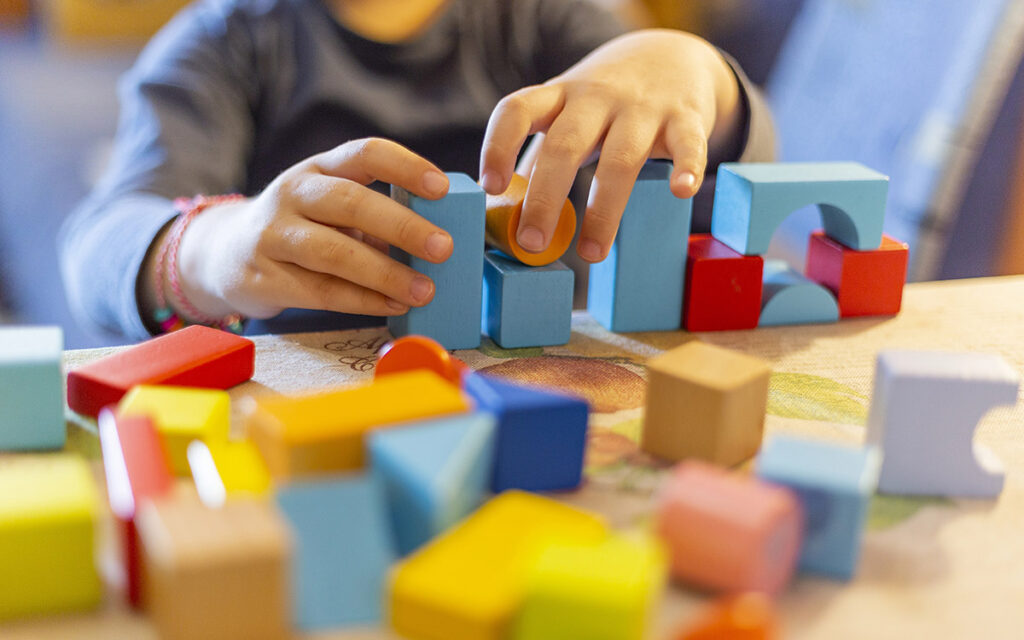
The Essential Montessori Approach That Shapes Confident, Capable Learners.
Sensorial learning Montessori is at the heart of the Montessori philosophy. It provides children with the tools they need to understand the world through exploration, curiosity, and hands-on discovery. In early childhood, the brain absorbs information at an extraordinary rate. Children learn not through passive instruction but through meaningful experiences that activate their senses. Sensorial education provides them opportunities to classify, compare, organize, and interpret the environment around them, creating a strong foundation for academic skills and lifelong learning. At KV Montessori, sensorial learning is woven into the daily experience, helping children grow into confident, independent, and deeply engaged learners.
Understanding the importance of sensorial learning begins with understanding how children naturally develop. From infancy through early childhood, the senses guide a child’s interpretation of their surroundings. What they touch, hear, smell, see, and taste shapes neural pathways and supports cognitive development. Montessori education recognizes that the senses are more than sources of stimulation. They are the building blocks for understanding language, mathematics, problem solving, and even emotional expression. When children are offered thoughtfully designed materials and purposeful activities, their senses become tools for exploring patterns, sequencing information, and refining coordination. This empowers them to make sense of their world through direct experience instead of memorization.
“Children learn best by doing, touching, exploring, and discovering. Sensorial learning allows the mind to awaken through the senses.”
Dr. Maria Montessori believed that education should help children classify and understand the impressions they receive each day. Without intentional sensory experiences, information can feel overwhelming or disorganized for a young mind. Sensorial materials bring clarity and order to the child’s world. Each activity isolates a single quality, such as weight, temperature, color, shape, size, texture, or scent. By isolating one concept at a time, the child is able to compare and internalize information with precision. This process strengthens memory, attention, and concentration, skills that become essential for later academic success. At KV Montessori, sensorial work is not simply an enrichment activity. It is a core part of the prepared environment, shaping growth across all areas of development.
How Sensorial Learning Builds Cognitive Development
When children use their senses to explore, they activate powerful brain processes that support analytical thinking. Cognitive development is strengthened through repetition, classification, and self-directed exploration. Montessori sensorial materials invite the child to observe, categorize, sequence, and problem-solve independently. These actions promote critical thinking and long-term comprehension rather than surface-level understanding.
For example, when a child builds the Pink Tower, they are not only stacking blocks. They are comparing dimensions, refining perception, and learning to notice differences in size with increasing accuracy. Similarly, using the Color Tablets teaches children to distinguish shades while strengthening concentration and visual discrimination. These skills directly support reading readiness, mathematical reasoning, and scientific observation as the child progresses through their education.
Sensorial work also encourages children to make connections between concepts. Once they learn to sort by size, they can sort by weight. Once they learn to notice patterns in colors, they become more aware of patterns in numbers or language. Each material builds upon the last, creating a natural progression that mirrors the child’s cognitive development. At KV Montessori, lessons are introduced when children demonstrate readiness, ensuring that sensorial activities always meet them at the appropriate developmental stage.
Strengthening Motor Skills and Coordination
One of the most meaningful outcomes of sensorial learning is the refinement of both fine and gross motor skills. Montessori materials are designed with intentional movement in mind. Children learn to carry, pour, stack, sort, thread, and manipulate objects with care and coordination. These seemingly simple activities contribute significantly to the development of dexterity, strength, and body awareness.
Fine motor development is particularly important for skills like writing, drawing, cutting, and practical life tasks. Sensorial materials such as knobbed cylinders require precise hand movements that strengthen the child’s pincer grasp and finger control. As children progress, their hands become stronger and more controlled, allowing them to move into early writing activities. Likewise, tasks that involve lifting or carrying develop gross motor coordination and spatial awareness.
The rhythm and flow of sensorial work also encourage the development of self-regulation. Children learn to move slowly, return materials to their proper place, and complete tasks with intention. This coordination between mind and body reflects one of Montessori’s core principles. To educate the mind, the body must be engaged with purpose. At KV Montessori, sensorial learning gives children opportunities to practice these essential physical skills in a calm, structured, and respectful environment.
Supporting Emotional Growth and Confidence
Sensorial learning is not solely about cognitive and physical development. It also plays a powerful role in emotional maturity. When children participate in hands-on activities that encourage independence, they begin to trust their abilities. Mastery builds confidence. With each successful completion of a task, children strengthen their willingness to try new challenges and explore new materials.
Montessori sensorial activities are designed to be self-correcting. Children can evaluate their progress without constant adult intervention. This fosters resilience and internal motivation, guiding them to try again when challenges arise. The satisfaction of discovering the correct solution independently helps build a strong sense of pride and emotional stability.
Children also learn to manage frustration. When something does not fit or match as expected, they learn to adjust, analyze, and try again. This emotional skill is foundational for life. It helps children cope with difficulty, adapt to new environments, and develop a calm, prepared approach to problem solving. At KV Montessori, the sensorial environment is intentionally peaceful, encouraging children to work at their own pace. The result is an emotionally secure learning atmosphere that honors each child’s process and progress.
“Through sensorial learning, children gain confidence not only in what they can do, but in who they are becoming.”
Developing Language and Mathematical Foundations
Many people are surprised to learn that sensorial education directly prepares children for reading, writing, and mathematics. The Montessori method recognizes that before children can understand symbols such as letters and numbers, they must first develop the ability to discriminate, sequence, and classify. These capacities are strengthened through sensorial exploration.
Language skills grow naturally as children refine their auditory and visual senses. When they distinguish between similar sounds or identify subtle differences in shapes and textures, they are training their brains for phonetic awareness and vocabulary expansion. Montessori offers rich opportunities for children to name and describe their experiences, which strengthens verbal communication and expressive confidence.
Mathematical concepts are also rooted in sensorial foundations. Children learn to compare size, quantity, length, and volume through hands-on activities long before being introduced to numerals. For example, exploring the Brown Stair develops understanding of gradation, which later supports concepts such as measurement and geometry. Cylinders, bead chains, and spindle boxes further link sensorial impressions to mathematical thinking.
At KV Montessori, these connections unfold naturally because sensorial learning is integrated into every area of the classroom. As children move from concrete experiences to more abstract ideas, they build a deep, meaningful understanding rather than simply memorizing facts.
Encouraging Focus, Concentration, and Independence
One of the most valuable gifts sensorial learning provides is the development of concentration. Montessori classrooms are intentionally designed to help children focus on one activity at a time. Sensorial materials demand thoughtful repetition and careful observation, which strengthens attention span. When children are allowed to work without interruption, they develop the ability to enter a state of deep concentration known in Montessori as normalization. This is where true learning takes place.
Independence is another core outcome of sensorial work. Children select their materials, carry them to a workspace, complete the activity, and return the items to their proper place. These steps empower children to trust themselves and take ownership of their learning. Independence builds leadership, responsibility, and initiative. Children learn that they are capable and that their effort matters.
At KV Montessori, teachers observe each child closely to determine when to introduce new sensorial activities. This respects the child’s pace and helps foster an environment where concentration flourishes naturally.
Preparing Children for Real World Understanding
The purpose of sensorial learning is not simply to teach children how to use educational materials. It is to help them understand the world around them with greater clarity and appreciation. Children who experience rich sensory education learn to notice details, appreciate patterns, and make thoughtful observations. They become curious thinkers who ask questions, seek explanations, and explore deeper meanings.
Children also become more aware of their environment. The skills they gain from sensorial exploration help them interact with their surroundings more confidently and respectfully. Whether identifying shapes in nature, comparing textures in daily life, or recognizing rhythms in language, sensorial learning gives children a profound way of connecting to the world.
KV Montessori embraces this philosophy by preparing an environment that encourages discovery and allows sensorial learning to unfold naturally. Each activity helps children grow into aware, attentive, and capable individuals who approach life with curiosity and enthusiasm.
The Montessori Difference at KV Montessori
At KV Montessori, sensorial learning is an essential part of the curriculum and daily classroom experience. Our educators carefully prepare each environment with authentic Montessori materials that nurture the child’s natural curiosity. The focus is on providing meaningful, purposeful activity rather than passive instruction.
Children thrive when they are given opportunities to touch, explore, compare, and discover. Sensorial learning teaches them to process information with clarity and confidence, supporting growth across physical, cognitive, social, and emotional domains. As they build independence and self-awareness, children become better prepared for academic learning and future challenges.
Sensorial learning matters because it respects how children learn best. It embraces the idea that every child carries unlimited potential that can be unlocked through meaningful exploration. At KV Montessori, we ensure that children experience this impactful approach every day, helping them develop the essential skills they need to grow into capable, confident young learners.