Creating a Positive Learning Environment for Children: From the earliest years, thoughtfully designed spaces shape behavior, confidence, and learning.
A positive learning environment for children is crucial for their development and growth.
Children respond to their surroundings long before they can explain how they feel.
A crowded room can make them restless. A noisy space can overwhelm them. An orderly environment can calm them.
These reactions are not accidental. They reflect how closely development is tied to physical space.
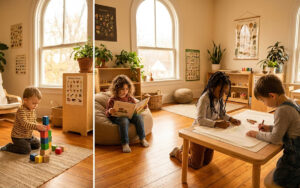
At KV Montessori, the classroom environment is considered an essential part of education, not simply a backdrop for it. Furniture, materials, lighting, layout, and even color choices are designed to support emotional security, concentration, and independence.
Understanding the role of environment helps explain why children often behave differently in different spaces and why thoughtful design can quietly guide growth.
Environment as a silent teacher
Young children learn continuously from what surrounds them.
They notice where objects belong, how materials are handled, and how movement flows through a room. These cues shape their understanding of order, responsibility, and respect long before formal rules are introduced.
In a carefully prepared environment, children begin to organize themselves.
They return materials to shelves. They move deliberately. They speak more softly. They wait their turn.
This is not because they are commanded to do so, but because the space itself communicates expectations.
At KV Montessori, classrooms are arranged to support this natural regulation, allowing children to internalize structure rather than resist it.
How physical design influences emotional security
Children learn best when they feel safe.
A predictable environment reduces anxiety. When children know where materials belong and what to expect, they feel in control of their surroundings.
Low shelves allow children to reach independently. Child-sized tables and chairs help them feel competent. Clear pathways reduce collisions and frustration.
These design choices may appear small, but together they send a powerful message.
This space was created for you.
When children feel ownership of their environment, confidence grows naturally.
Supporting independence through accessibility
An environment that requires constant adult assistance limits independence.
When materials are too high, tools are too large, or activities are too complex to manage alone, children become dependent even when they are capable.
Montessori classrooms are designed to remove these barriers.
Children can select their own work, carry it to a table or mat, complete it, and return it without help.
Each successful interaction strengthens coordination, problem-solving, and self-trust.
At KV Montessori, accessibility is not convenience. It is a developmental strategy.
Order as a foundation for concentration
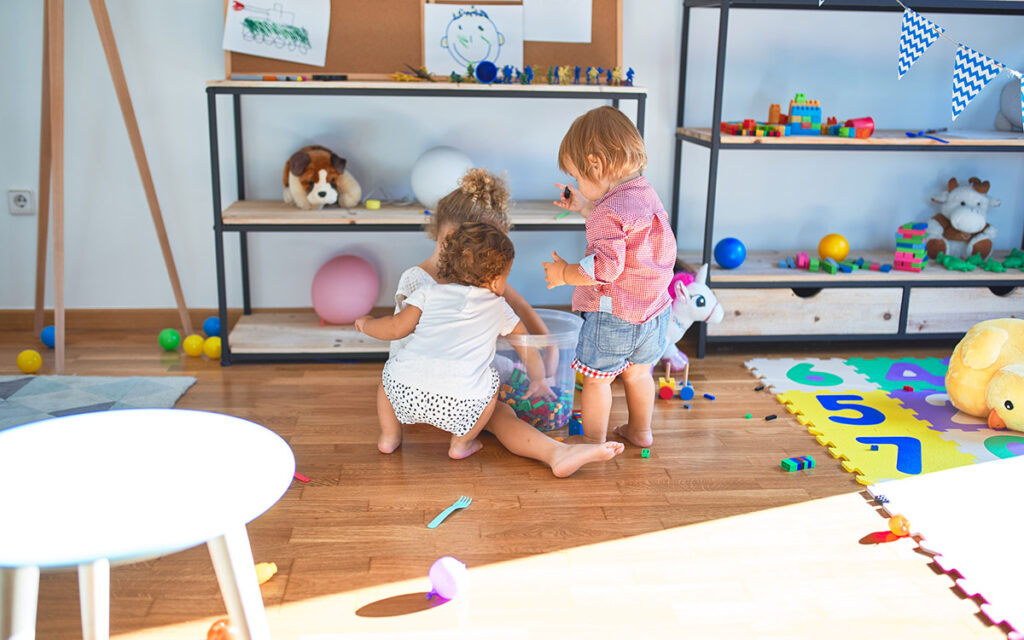
Young minds are sensitive to visual and sensory clutter.
Too many bright colors, crowded walls, or noisy decorations can fragment attention and increase stress.
Orderly environments support longer focus.
Organizing shelves and purposefully limiting materials allows children to choose activities more intentionally and sustain their engagement for longer.
This calm visual field allows mental energy to be directed toward learning instead of managing stimulation.
Nature and light as developmental tools
Natural elements influence mood and cognition.
Soft lighting reduces fatigue. Natural colors promote calm. Plants and outdoor access help regulate emotions and support curiosity.
Montessori classrooms often incorporate these elements deliberately.
At KV Montessori, classrooms are designed to feel warm and inviting rather than institutional, supporting a sense of belonging that strengthens emotional development alongside academic growth.
Social development within shared spaces
Environment also shapes how children interact with one another.
Clear work areas reduce conflict. Defined spaces support cooperation. Materials designed for shared use encourage patience and communication.
Children learn social boundaries through physical ones.
They understand where their work begins and ends.
They learn to wait when a material is in use.
They negotiate respectfully within visible limits.
These experiences build social awareness without constant adult intervention.
The long-term impact of early environments
Early childhood environments form templates for future learning.
Children who grow up in spaces that encourage order, autonomy, and respect often carry these habits into later schooling.
They approach new classrooms with confidence.
They manage materials responsibly.
They organize their work.
They feel capable of navigating unfamiliar settings.
These skills extend beyond academics into relationships and self-regulation.
What parents often observe
Families frequently notice that children who attend Montessori programs become more organized at home.
They line up shoes.
They tidy toys without being asked.
They create small routines for themselves.
These behaviors are not taught through lectures.
They emerge from daily experience within an environment that models order and trust.
Final thoughts
Children do not separate learning from living.
Their environment teaches constantly, shaping habits, emotions, and expectations.
KV Montessori designs its classrooms with the understanding that every shelf, pathway, and material influences development. When space supports the child, growth follows naturally.
If you would like to see how environment plays a role in your child’s education, contact KV Montessori to schedule a tour or speak with an educator. Experiencing the classroom firsthand reveals how thoughtfully designed spaces support confident, focused learners.