
Exploring how Montessori classrooms help children develop confidence, responsibility, and self-motivation.
One of the defining characteristics of Montessori education is its strong emphasis on independence. In Montessori classrooms, children are encouraged to take an active role in their own learning, make decisions, and develop the confidence to solve problems on their own. This approach helps students build essential life skills that extend far beyond the classroom, such as critical thinking, self-discipline, and time management, emphasizing the value of Montessori independence learning.
The Montessori philosophy was developed by Italian educator and physician Maria Montessori, who believed that children naturally desire independence and thrive when given the opportunity to explore and learn at their own pace. Rather than directing every aspect of a child’s day, Montessori educators guide students while allowing them to take ownership of their learning experiences.
Schools such as KV Montessori apply these principles to create environments where children can develop independence through daily activities, academic exploration, and practical life experiences.
Understanding how Montessori education encourages independence helps explain why many families choose this educational approach to support their child’s long-term development.
Incorporating Montessori independence education into daily activities promotes independence, which is crucial for personal growth.
Freedom Within Structure
Montessori classrooms are built on the concept of freedom within structure. Students are given the freedom to choose their learning activities, but this freedom exists within carefully designed boundaries that support productive learning.
Children select materials from classroom shelves, decide how long to work on certain tasks, and explore subjects that capture their interest. However, teachers provide guidance to ensure students are engaging with appropriate materials and progressing through the curriculum.
This balance between freedom and structure helps children develop decision-making skills. They learn to evaluate options, manage their time, and take responsibility for completing tasks.
By allowing students to make choices in a supportive environment, Montessori education helps children develop confidence in their abilities.
“Montessori education nurtures independence by allowing children to make meaningful choices within a structured learning environment.”
The Prepared Environment
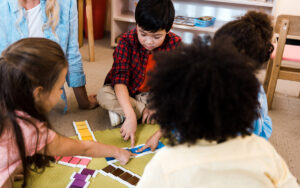
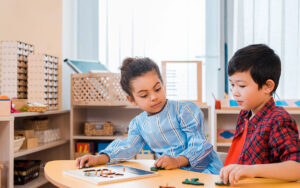
The physical design of Montessori classrooms also plays a significant role in encouraging independence. Classrooms are intentionally arranged so that children can access materials and complete tasks without constant adult assistance.
Furniture is sized appropriately for children, shelves are organized and accessible, and learning materials are arranged in an orderly manner. This prepared environment allows students to move freely around the classroom and select activities independently.
Children also learn responsibility by caring for the environment. After completing an activity, they return materials to their designated place so others can use them.
This structure teaches organization, respect for shared spaces, and accountability. Over time, children become more confident in managing their learning environment and daily responsibilities.
At schools like KV Montessori, classrooms are thoughtfully designed to support independence while maintaining a calm and focused atmosphere, which is critical to developing children’s confidence in managing their learning environment and daily responsibilities through engaging Practical Life Activities.
Practical Life Activities
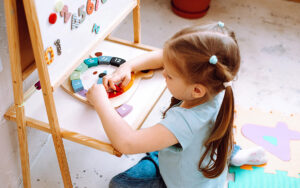
Practical life activities are a central component of Montessori education and play an important role in developing independence. These activities teach children everyday skills that promote responsibility, coordination, and concentration.
Examples of practical life activities include pouring liquids, arranging objects, cleaning workspaces, preparing snacks, and organizing materials. Although these tasks may seem simple, they provide valuable opportunities for children to practice self-sufficiency.
Through these exercises, children learn how to complete tasks step by step and take pride in their accomplishments. Successfully completing these activities helps build confidence and reinforces the idea that they are capable of managing real-world responsibilities.
Practical life skills also strengthen fine motor development and attention to detail, both of which support academic learning by enabling students to engage more effectively in tasks that require precision and focus, such as writing and problem-solving.
Self-Paced Learning
Another way Montessori education encourages independence is through self-paced learning. In traditional classrooms, students often move through lessons at the same speed regardless of individual readiness.
Montessori classrooms allow children to progress according to their own developmental timeline. Teachers observe each student carefully and introduce new materials when the child demonstrates readiness for the next concept.
This personalized method guarantees that children experience neither haste nor stagnation. Instead, they develop confidence by mastering skills at their own pace.
When children experience success through self-paced learning, they become more motivated to explore new challenges and take ownership of their education.
“Self-paced learning allows children to develop confidence as they master new skills through exploration and discovery.”
The Role of the Montessori Teacher
In Montessori classrooms, teachers serve as guides rather than traditional instructors. Their role is to observe each child’s interests and developmental progress, introducing new materials and activities when appropriate.
Instead of giving constant directions, Montessori teachers allow students to work independently and step in only when guidance is needed. This approach encourages children to think for themselves and develop problem-solving abilities.
Teachers also model respectful communication and patience, creating an environment where children feel comfortable exploring new ideas and learning from mistakes.
By acting as facilitators rather than lecturers, Montessori educators empower students to become active participants in their own learning journey.
Building Confidence Through Responsibility
As children take on responsibilities in the classroom, they develop confidence in their abilities. Tasks such as organizing materials, caring for classroom plants, or assisting younger students help reinforce a sense of contribution and capability.
These experiences show children that their actions matter and that they play an important role in the classroom community.
Over time, students begin to see themselves as capable individuals who can manage challenges and make meaningful decisions.
This confidence becomes the foundation for future learning, leadership, and personal growth.
FAQs
Why is independence important in Montessori education?
Independence helps children build confidence, develop problem-solving skills, and take responsibility for their learning and daily activities.
How do Montessori classrooms encourage independence?
Montessori classrooms encourage independence through self-directed learning, prepared environments, practical life activities, and teacher guidance rather than direct instruction.
Do Montessori students still receive guidance from teachers?
Yes. Montessori teachers observe students and provide guidance when necessary, introducing new materials and supporting each child’s learning progress.
At what age can children start developing independence in Montessori programs?
Children can begin developing independence in Montessori environments as early as toddler programs, where practical life activities and self-directed exploration are introduced, and this foundation continues to grow as they progress through the primary and elementary levels, fostering greater autonomy and decision-making skills.
Conclusion
Independence is one of the most valuable skills children can develop during their early years. Montessori education supports this growth by creating environments where children can explore, make decisions, and take responsibility for their learning.
Through practical life activities, self-paced exploration, and supportive guidance from teachers, Montessori classrooms help children build confidence and develop essential life skills.
At KV Montessori, students are encouraged to grow into independent learners who approach challenges with curiosity and confidence.
Schedule a tour today to see how KV Montessori fosters independence and helps children develop the skills they need for lifelong success.