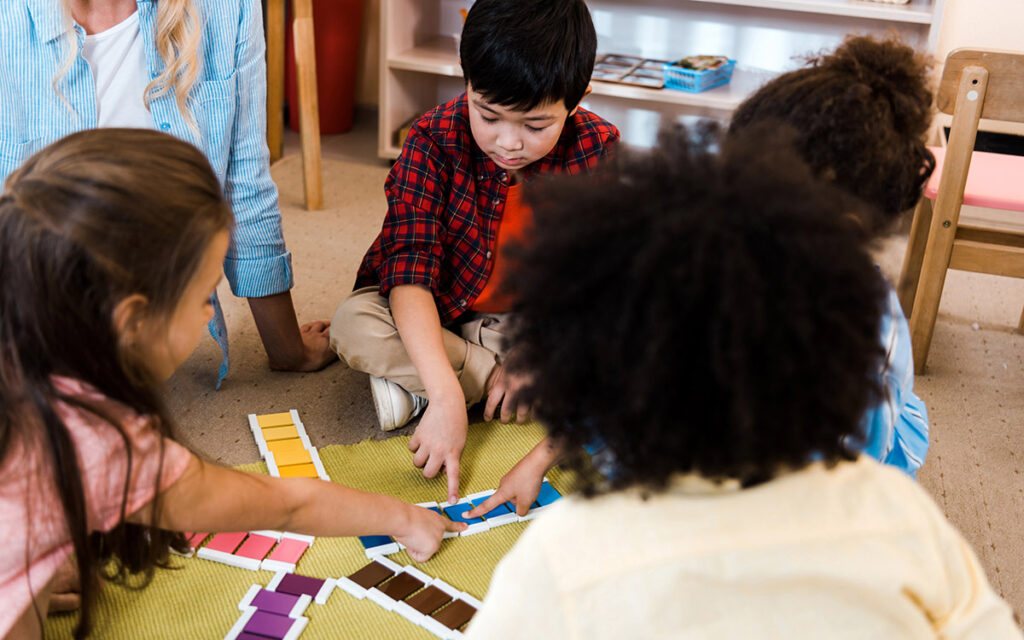
Exploring the foundational ideas that shape Montessori education and support lifelong learning.
Montessori education has become one of the most respected and widely adopted educational philosophies in the world. Montessori learning environments, renowned for their child-centered approach and emphasis on independence, aim to foster academic, social, and emotional development in children.
This educational model was created by Maria Montessori, an Italian physician and educator who studied child development and learning behaviors extensively in the early 20th century. Through her research and classroom observations, Montessori identified several principles, now known as the Maria Montessori principles, that guide how children learn best.
These principles continue to shape Montessori classrooms today. These Maria Montessori principles influence the communication between teachers and students, the arrangement of classrooms, and the way children acquire knowledge in various subjects.
Schools such as KV Montessori apply these core principles to create supportive learning environments where children can develop independence, curiosity, and confidence.
Understanding Maria Montessori’s core principles helps parents and educators see why this educational approach, guided by the Maria Montessori principles, has remained relevant for more than a century.
Respect for the Child
Respect for the child is one of the most fundamental principles of Montessori education. Maria Montessori believed that children should be treated as capable individuals with their own developmental timelines and learning styles.
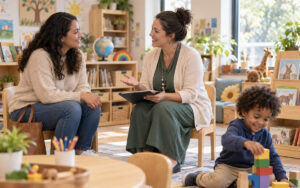
In Montessori classrooms, educators observe each child carefully and respond to their individual needs. Rather than forcing all students to follow the same schedule or pace, teachers provide guidance while allowing children to progress naturally.
Respect also means paying attention to what kids say, encouraging them to ask questions, and supporting their interest in learning. Students are given the opportunity to make choices about their work and explore subjects that interest them.
This respectful approach builds trust between teachers and students while helping children develop confidence in their abilities.
“When children are respected as capable learners, they develop confidence, curiosity, and a genuine love for discovery.”
The Prepared Environment
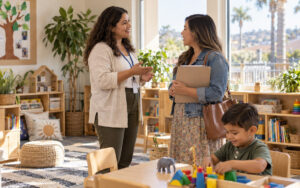
Another core principle of Montessori education is the prepared environment. Montessori classrooms are intentionally designed to support independent learning and exploration.
Furniture and materials are scaled for children, making it easier for them to access learning tools and move around the classroom independently. Materials are arranged neatly on open shelves so students can choose activities without constant adult assistance.
Each learning material has a specific educational purpose and is designed to help children understand concepts through hands-on interaction.
The prepared environment encourages concentration, organization, and responsibility. Children learn to care for their classroom by returning materials to their proper place after completing an activity.
At schools like KV Montessori, classrooms are carefully organized to create a calm, focused atmosphere where children can fully engage in their work.
Self-Directed Learning
Maria Montessori believed that children are naturally motivated to learn when given the opportunity to explore topics that interest them. For this reason, self-directed learning is a central principle of the Montessori method.
Montessori classrooms allow students to select activities from a variety of materials tailored to their developmental stage. Teachers give students new materials when they are ready, but they let the kids choose how they use them.
This approach allows children to develop independence and take ownership of their education. Instead of learning solely to meet external expectations, students become intrinsically motivated to understand new ideas.
Self-directed learning also helps children build important skills such as time management, focus, and problem-solving.
“Montessori education encourages children to take ownership of their learning journey.”
Learning Through Hands-On Experiences
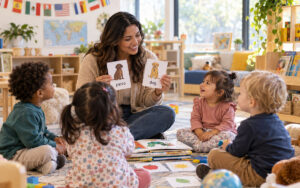
Montessori education emphasizes learning through direct experience rather than passive instruction. Students interact with specially designed materials that allow them to explore concepts physically and visually.
For example, mathematical concepts are often introduced using beads, rods, and counting materials that help children visualize numbers and patterns. Language development may involve tracing letters or constructing words with movable alphabets.
These tactile learning experiences help children internalize abstract concepts more effectively. By engaging multiple senses, hands-on materials support deeper understanding and long-term retention, particularly in mixed-age classrooms where children can learn from each other and reinforce their knowledge through collaborative activities.
This experiential learning model encourages curiosity and exploration, allowing children to discover knowledge through active participation.
Mixed-Age Classrooms
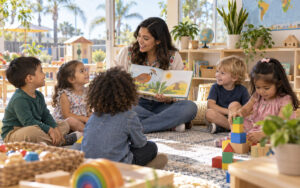
Another key principle in Montessori education is the use of mixed-age classrooms. Instead of grouping students strictly by age, Montessori classrooms often include children from a range of developmental stages.
This structure allows younger children to observe and learn from older peers, while older students reinforce their knowledge by helping others.
Mixed-age classrooms promote collaboration rather than competition. Children naturally develop leadership, empathy, and communication skills as they interact with classmates at different stages of learning.
This community-based environment mirrors real-world social structures, helping students develop the interpersonal skills needed throughout life.
Encouraging Independence
Maria Montessori believed that fostering independence was one of the most important goals of education. Montessori classrooms encourage children to take responsibility for their learning, their environment, and their personal growth.
Students practice independence through everyday activities such as selecting work materials, completing tasks, and caring for classroom spaces. Teachers provide guidance when needed but allow children the freedom to explore and solve problems independently.
These experiences help children develop confidence, resilience, and self-discipline.
Over time, students become capable learners who approach challenges with curiosity and determination.
FAQs
Who was Maria Montessori?
Maria Montessori was an Italian physician and educator who developed the Montessori method of education based on her observations of how children learn and develop.
What are the core principles of Montessori education?
Key Montessori principles include respect for the child, prepared environments, self-directed learning, hands-on experiences, mixed-age classrooms, and fostering independence.
Why are Montessori classrooms mixed-age?
Mixed-age classrooms allow children to learn from one another, encouraging collaboration, mentorship, and social development.
How do Montessori principles benefit children?
Montessori principles support independence, critical thinking, creativity, and confidence while helping children develop a lifelong love of learning.
Conclusion
Maria Montessori’s core principles continue to influence education around the world. By emphasizing respect, independence, hands-on learning, and carefully prepared environments, Montessori classrooms provide children with opportunities to develop both academic knowledge and essential life skills.
These principles help create educational spaces where curiosity is encouraged, exploration is celebrated, and each child’s individual development is respected.
At KV Montessori, educators apply these foundational ideas to create a nurturing environment where children can grow into confident, independent learners.
Schedule a tour today to discover how KV Montessori brings Maria Montessori’s educational principles to life in the classroom.