Understanding the Montessori Method Explained: A child-centered educational approach designed to nurture curiosity, independence, and a lifelong love of learning.
Education shapes how children understand the world around them, develop critical thinking skills, and build confidence in their abilities. While many traditional school systems follow structured lesson plans and standardized teaching methods, the Montessori approach offers a different philosophy. It focuses on nurturing each child’s natural curiosity while supporting their individual pace of development.
The Montessori method was developed by Italian physician and educator Maria Montessori in the early 20th century. After studying how children learn and interact with their environment, Montessori designed an educational system that encourages independence, hands-on exploration, and self-motivated learning.
Today, Montessori schools around the world follow this philosophy to create classrooms that support both academic growth and personal development. At KV Montessori, the Montessori method is implemented through thoughtfully prepared environments, guided learning experiences, and individualized instruction that allows every child to thrive.
Understanding how the Montessori method explained works helps parents see why this educational model continues to grow in popularity among families seeking a more personalized approach to learning.
The Foundations of the Montessori Method
The Montessori method posits that children learn most effectively when they actively participate in their environment. Rather than passively receiving information from a teacher, students explore materials, solve problems, and discover concepts through hands-on activities.
In Montessori classrooms, teachers act as guides who observe and support each child’s learning journey. They introduce new materials when students are ready and encourage exploration rather than directing every activity.
This approach allows children to develop independence and confidence while building essential academic skills. Instead of focusing solely on memorization, Montessori education emphasizes understanding and discovery.
Classrooms are also structured to promote focus and concentration. Students are often given extended periods of uninterrupted work time, allowing them to fully engage with learning materials and explore topics in depth.
“The Montessori method encourages children to become active participants in their own learning rather than passive recipients of information.”
Learning Through Hands-On Materials
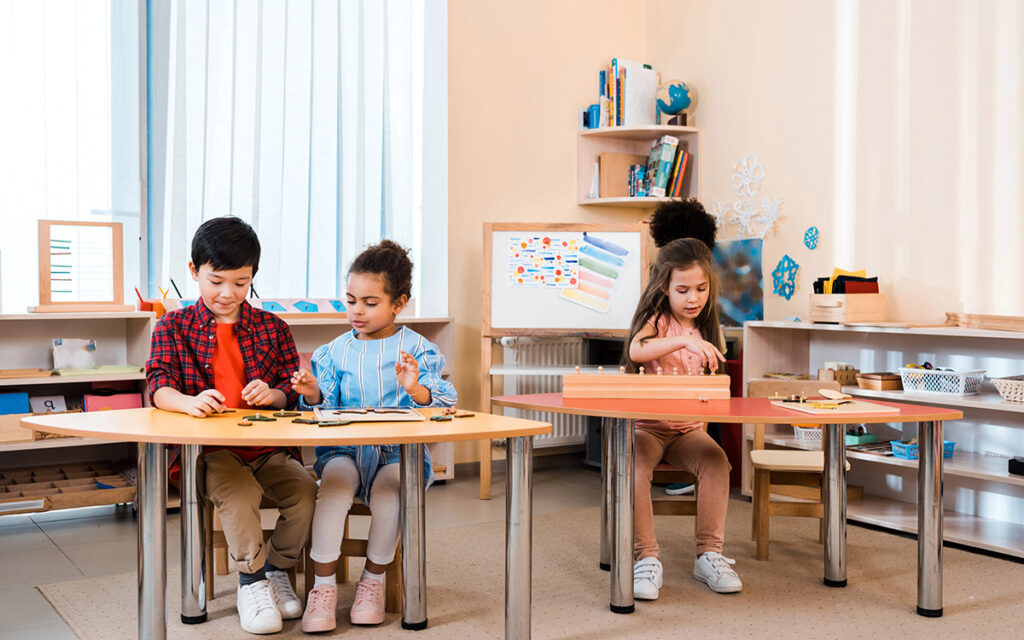
One of the most recognizable features of Montessori education is the use of specialized learning materials. These tools are carefully designed to help children understand abstract concepts through physical interaction.
For example, mathematics concepts may be introduced using bead chains, counting blocks, or other tactile tools that allow children to visualize numbers and quantities. Language development often involves tracing letters, building words with movable alphabets, and practicing reading through interactive materials.
These hands-on tools engage multiple senses, which helps reinforce understanding and memory. Instead of simply hearing about a concept, students experience it directly.
This method also allows children to correct mistakes independently. Many Montessori materials are designed with built-in feedback mechanisms so students can identify and adjust errors without relying solely on teacher instruction.
The Prepared Classroom Environment
Montessori classrooms are carefully designed environments that support independent learning. Everything in the classroom, from the furniture to the placement of materials, is arranged to encourage exploration and responsibility.
Shelves are stocked with learning materials that children can access freely. Each item has a specific purpose and is organized in a way that encourages students to choose activities independently.
Children are also responsible for maintaining the classroom environment. After completing an activity, they return materials to their proper place, helping develop organization and respect for shared spaces.
This prepared environment creates a calm and focused atmosphere where children feel empowered to take ownership of their learning.
Schools such as KV Montessori intentionally structure their classrooms to foster independence while upholding a balanced and supportive learning environment.
Self-Paced and Individualized Learning
Another key feature of the Montessori method is individualized learning. In traditional classrooms, students often move through lessons at the same pace regardless of their readiness or learning style. Montessori education allows children to progress according to their own developmental timeline.
Teachers observe each student closely and introduce new materials when the child demonstrates readiness for the next concept. This guarantees that the right learning journey challenges and supports students.
Children who grasp a concept quickly can continue exploring more advanced materials, while those who need additional practice can work at a comfortable pace without feeling rushed.
This individualized approach helps reduce stress and builds confidence in students as they develop new skills.
“Montessori classrooms encourage children to learn at their own pace, helping them develop confidence and a genuine love for learning.”
Encouraging Independence and Responsibility
Independence is one of the central goals of Montessori education. Children are encouraged to make choices, manage their time, and take responsibility for their work.
Students select activities from the available materials, decide how long to work on them, and finish with minimal interruption. Teachers provide guidance when needed but allow children the space to explore and solve problems independently.
This structure helps students develop important life skills such as decision-making, self-discipline, and problem-solving.
Over time, children become more confident in their abilities and more motivated to learn. Rather than working solely for grades or rewards, Montessori students develop an internal drive to understand and master new concepts.
FAQs
What is the Montessori method?
The Montessori method is an educational philosophy that emphasizes child-led learning, hands-on materials, and individualized instruction within a prepared classroom environment.
How is Montessori different from traditional education?
Montessori education focuses on self-directed learning and hands-on exploration, while traditional classrooms often rely more heavily on teacher-led instruction and standardized pacing, which can limit students’ ability to pursue their individual interests and learning styles; in contrast, Montessori students follow a flexible curriculum that allows them to engage with subjects at their own pace and according to their interests.
Do Montessori students follow a curriculum?
Yes. Montessori schools follow a structured curriculum that includes subjects such as math, language, science, and cultural studies, but students often progress through materials at their pace.
What age groups benefit from Montessori education?
Montessori education can benefit children from infancy through adolescence, though many programs focus on early childhood and elementary education, particularly for children aged 3 to 12 years, where the emphasis is on fostering independence and a love for learning.
Conclusion
The Montessori method offers a unique approach to education that prioritizes curiosity, independence, and individualized learning. By combining hands-on materials, prepared environments, and self-paced exploration, Montessori classrooms help children develop both academic knowledge and essential life skills.
This philosophy continues to influence schools worldwide, offering families an alternative to traditional educational models. Through personalized learning experiences, children develop confidence, creativity, and a genuine love for discovery.
At KV Montessori, educators apply the Montessori method to create a supportive learning environment where children can grow academically, socially, and emotionally.
Schedule a tour today to see how KV Montessori’s classrooms inspire independence, creativity, and a lifelong passion for learning.