Starting a new classroom this fall can bring tears at drop-off, and that is a normal, healthy sign of attachment, not a red flag. To help your child ease into a new classroom, keep goodbyes short, predictable, and honest rather than sneaking away or lingering. Most separation anxiety eases within one to two weeks once a consistent routine is in place. A Montessori environment, with its familiar daily rhythm and mixed-age classroom, can make that adjustment even smoother. Understanding separation anxiety in the context of a new classroom is essential for a smoother transition.
Additionally, recognizing the signs of separation anxiety new classroom can help parents and educators support children more effectively.
Key Takeaways
- Tears at drop-off are a normal sign of attachment, not a problem to fix.
- A short, consistent goodbye ritual works better than a long, drawn-out one.
- Always say goodbye to your child, and never sneak away, even if it seems easier.
- Most children settle into a new classroom within one to two weeks, especially with a predictable routine.
- Staying consistent after the first day matters more than having a perfect first morning.
Why Separation Anxiety Shows Up When Your Child Starts a New Classroom
Separation anxiety is a normal developmental stage, not a sign that something is wrong with your child or your choice of school. It typically peaks between 12 months and 3 years, but according to HealthyChildren.org, it can resurface at any age whenever a child faces something new and unfamiliar.
A new classroom, a new teacher, or even a new school year with familiar friends in an unfamiliar room can all trigger it. Zero to Three notes that this reaction actually reflects a secure attachment: your child trusts you enough to protest when you leave. That is worth remembering on a particularly challenging drop-off morning.
Older preschoolers who handled drop-off well last year may still have a few tearful mornings when they move into a new room. That is not backsliding. It is simply a normal response to change.
Preparing at Home Before the First Day
The week or two before school starts is a good time to gently shift routines so the first morning feels less jarring. According to NAEYC, gradually moving bedtime and wake-up time closer to the school schedule helps children arrive rested rather than rushed and overtired.
Talk about the new classroom in simple, honest terms. Mention who might be there, what the room might look like, and that you will always come back. Avoid over-hyping the day as one big exciting adventure, since a child who expects nonstop fun may feel confused or let down by an ordinary first morning.
If your family is considering KV Montessori Academy, a visit ahead of time can make a real difference. Families in Eastlake and Chula Vista are welcome to schedule a tour so your child can see the classroom, meet a guide, and picture themselves there before day one.
Build a Short, Predictable Goodbye Ritual
A goodbye ritual that takes under a minute, happens the same way every day, and always includes an actual goodbye works better than a long, drawn-out farewell. NAEYC’s guidance on helping children say goodbye is clear on one point: never sneak away, even if it seems easier in the moment.
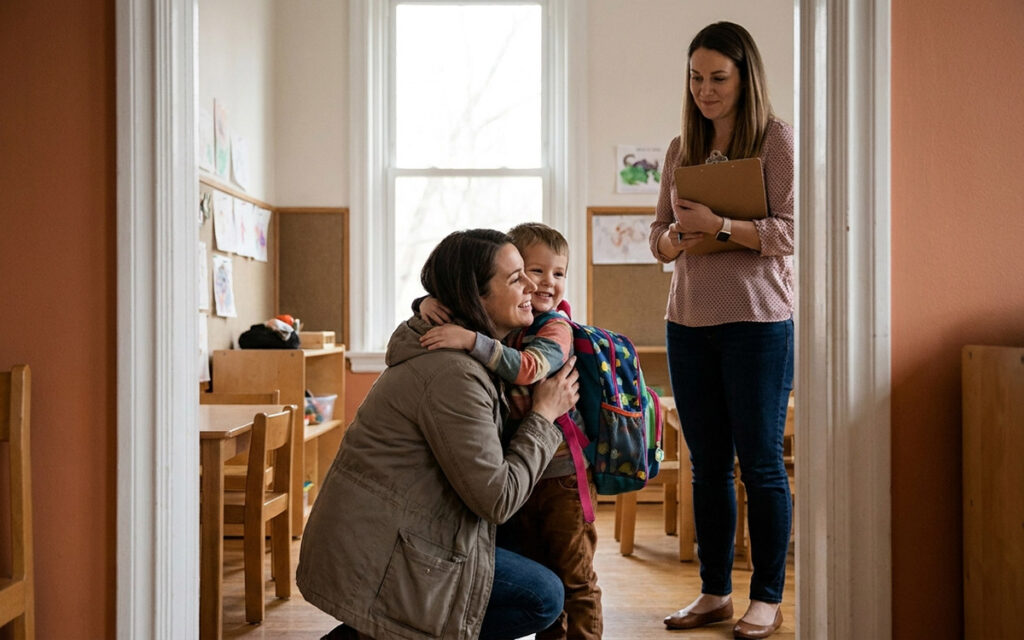
A simple ritual might be a hug, a wave at the window, and a familiar phrase like “I’ll see you after lunch.” Repetition is what makes this work best. The predictability itself is reassuring, even before your child can name that feeling.
A short, predictable goodbye teaches a child that school is safe, long before words ever could.
Sneaking out without saying goodbye may stop tears for a while, but it often has the opposite effect. Children who are surprised by a parent’s sudden disappearance tend to become more anxious and clingy at future drop-offs, not less.
What to Do (and Avoid) in the Moment of Drop-Off
Timing matters more than parents often expect. HealthyChildren.org suggests arriving after your child has eaten and is not overtired, since hunger and fatigue both make separation harder.
Hand your child off to a familiar face and a familiar routine, whether that is a favorite activity on the shelf or a teacher who greets them by name at the door. A quick, warm handoff gives your child something to step into rather than an empty moment of uncertainty.
A small comfort object from home, like a family photo tucked in a backpack, can also help. Zero to Three points out that a familiar item can serve as a bridge between home and the classroom during the day.
If your child pleads for you to stay, it is usually best not to return once you have said goodbye. Going back tends to prolong the tears and teaches your child that pleading works, which makes the next goodbye harder, not easier.
How a Montessori Classroom Supports an Easier Transition
A Montessori classroom is built around a prepared environment: an orderly, calm space where every material has a place and every part of the day follows a predictable rhythm. According to the American Montessori Society, this consistency helps young children feel secure because they always know what comes next.
Mixed-age groupings also help. Older classmates, who have already been through the same adjustment, often model calm, confident behavior for the younger children in the room. At KV Montessori Academy, children stay with the same trained guide throughout the day, which means your child is building trust with one steady adult rather than adjusting to a rotating cast of faces.
You can read more about how this structure works across our Toddler, Primary, and Primary Advanced classrooms on our curriculum page and learn more about our approach and teachers on our About Us page.
How Long It Takes to Adjust, and When to Ask for Help
For most children, the hardest mornings occur in the first few days and noticeably ease within one to two weeks. Every child settles at their own pace, and a few tough mornings even after the first week are still within the normal range.
Signs of a smoother transition include shorter goodbyes, quicker recovery after you leave, and positive comments about the day once your child is home. Teachers can also offer a helpful outside perspective, since many children who cry at drop-off calm down within minutes once the school day begins.
If crying is intense, persists well beyond two weeks, or comes with changes in eating, sleeping, or overall mood, it is worth speaking with your child’s pediatrician. Most separation struggles are developmentally normal, but a doctor can help rule out other causes if something feels off.
Staying Consistent After the First Week
The single most useful thing a parent can do after the first week is stay consistent: same goodbye ritual, same on-time pickup, same calm response to tears. Changing the routine at the first sign of difficulty, such as lingering longer or skipping days, tends to make the adjustment take longer rather than shorter.
On-time pickup matters because it reinforces your promise to return. A child who is picked up late, even once, may start to worry it will happen again, which can undo progress from a challenging week.
Consistency does not mean every morning will be tear-free. It means your child can count on the same steady pattern, which ultimately builds real confidence in a new classroom.
A Gentle Reminder
Every child develops at their pace, and adjustment timelines vary from one family to the next. This article is general educational information based on child development guidance, not a guarantee of a specific outcome or timeline for your child.
Starting a new classroom is a big step, and a few challenging mornings are simply part of that process, not a sign you have made the wrong choice. With a steady routine and a little patience, most children adjust and begin to enjoy their days in the classroom.
Curious what a Montessori day actually looks like for your child? Come see it in person. KV Montessori Academy welcomes families in Eastlake and Chula Vista to tour our classrooms and meet our teachers. Schedule a Tour or call (619) 730-4020. You can also browse more parenting and Montessori topics on our blog.
FAQ
How long does separation anxiety usually last when a child starts a new classroom? Most children show the hardest reaction in the first few days, with noticeable improvement within one to two weeks once a consistent routine is in place. Some children adjust in just a few days, while others take a bit longer, and both are within the normal range. If intense crying continues well past two weeks, it is worth checking in with your child’s pediatrician or teacher.
Should I stay in the classroom if my child is crying at drop-off? Generally, no. Lingering or returning after saying goodbye tends to prolong tears and can teach a child that pleading will bring you back, which makes future goodbyes harder. A brief, warm, predictable goodbye followed by a confident exit is usually easier on your child than a long, drawn-out farewell.
What is the best time of day to drop off my child at a new classroom? Try to arrive after your child has eaten and is not overtired, since hunger and fatigue both make separation more difficult. A calm, unhurried morning routine before drop-off also helps your child arrive ready to settle in rather than rushed.
Will my toddler’s separation anxiety get worse if I keep them home when they cry? Keeping a child home after a hard morning can unintentionally make future transitions harder, since it teaches that crying leads to staying home. Consistent attendance, paired with a steady goodbye routine, generally helps children adjust more quickly than an inconsistent schedule.
How is starting a Montessori classroom different from a traditional preschool transition? A Montessori classroom offers a prepared, orderly environment and, often, the same trained guide with the child throughout the day, which many parents find comforting during the adjustment period. Mixed-age classrooms also mean younger children are surrounded by older peers who have already been through the same transition and can model calm, confident behavior.