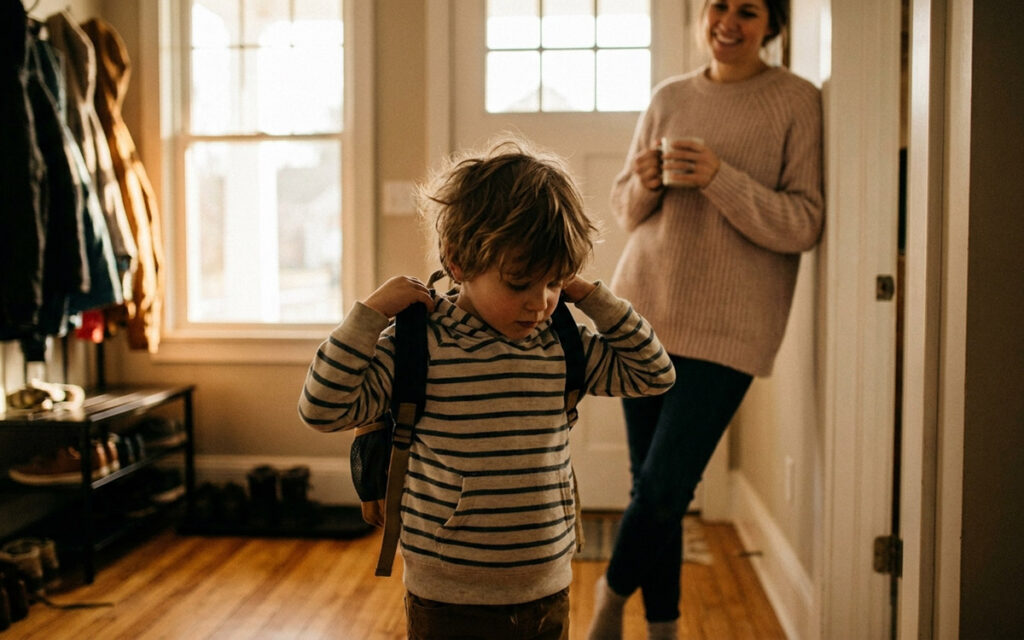
There’s no magic age or checklist for starting a toddler ready for Montessori school. Instead, look for signs like a growing interest in self-help tasks, curiosity about other children, tolerance for brief separations, and simple communication skills. Every toddler develops at their own pace, and a good Montessori toddler classroom meets children exactly where they are.
Parents often ask us the same question during tours at KV Montessori Academy: how do we know if our toddler is ready? It’s a fair question and a common source of second-guessing. The truth is that readiness isn’t a single milestone you check off. It’s a pattern of small, everyday signs that show your child is developing the independence and comfort needed to thrive in a toddler classroom.
Key Takeaways
- There’s no single “right age” to start Montessori toddler school. Readiness is about development, not a birthday.
- Wanting to feed or dress themselves signals a toddler’s natural drive toward independence.
- Comfort with brief separations matters more than having perfect social skills.
- Toilet learning helps but usually isn’t a strict requirement for enrollment.
- If your toddler isn’t showing every sign yet, a supportive classroom builds those skills gradually over time.
What “Readiness” Really Means for a Toddler
Readiness for Montessori toddler school isn’t a strict checklist your child has to pass. It’s a general sense that your toddler is showing curiosity about the world beyond home, a budding desire to do things independently, and the emotional footing to handle short separations. According to the American Montessori Society, the first three years of life are when a child’s brain develops faster than at any other stage, which is precisely why Montessori toddler environments are designed to nurture this natural drive rather than wait for a fixed age.
Every toddler hits these markers on a different timeline. Some 18-month-olds are already trying to pull on their shoes, while others take another six months to get there. Neither pace is wrong. What matters most is the overall trend toward independence, not a specific birthday on the calendar.
Signs of Growing Independence
One of the clearest signs a toddler is ready for a Montessori classroom is a growing “let me do it” instinct: wanting to feed themselves with a spoon, tugging at their shoes or jacket, or insisting on carrying their own cup. This drive toward self-sufficiency is a natural developmental stage, and it’s also the exact instinct Montessori practical life activities are designed to support.
You might notice your toddler getting frustrated when you help too quickly or repeating the same simple task, like stacking cups or opening a container, over and over. That repetition is a positive sign. It shows real concentration, which the American Montessori Society points to as a core skill Montessori toddler programs cultivate through hands-on, everyday activities. Zero to Three similarly notes that toddlers develop a strong drive toward self-help skills like feeding and dressing as part of typical growth in this age range.
Readiness isn’t a checklist. It’s a toddler’s growing drive to try things on their own.
None of these skills needs to be perfected before enrollment. A toddler who wants to try, even if they still need help finishing the job, is showing exactly the kind of independence a Montessori toddler classroom is built to nurture further.
Signs of Social and Emotional Readiness
Toddlers don’t need polished social skills to be ready for Montessori school. What matters more is that your toddler has a budding curiosity about other children and can be soothed after a brief separation from a parent or caregiver. It’s completely normal for a toddler to still cry at drop-off even when they’re otherwise ready.
Watch for your toddler showing interest in other children, wanting to sit near them, or trying simple parallel play. These are early signs of social readiness, even if actual sharing and cooperative play are still years away. According to HealthyChildren.org, a resource from the American Academy of Pediatrics, separation anxiety is a normal and even healthy sign of attachment in toddlers, and it typically eases with consistent routines and quick, warm goodbyes.
A toddler who protests at drop-off but settles within a few minutes once inside the classroom is showing real readiness. The goal isn’t a tear-free goodbye. It’s a child who can be comforted and re-engage with their day.
Communication Milestones That Support a Smooth Transition
Toddlers don’t need full sentences to succeed in a Montessori classroom, but a few simple communication skills make the transition smoother. Being able to say or gesture basic words like “more,” “help,” or “all done” and following one- or two-step directions such as “put the cup on the table” helps a toddler connect with teachers and peers throughout the day.
Language develops unevenly at this age, and that’s expected. Some toddlers are already stringing together short phrases by 20 months, while others are still relying mostly on gestures and single words. The National Association for the Education of Young Children describes toddlers as being in a stage focused on identity and independence, where language grows alongside a child’s sense of “who’s in charge” of their own body and choices.
Toddler classrooms are intentionally language-rich environments, with teachers narrating actions and offering real vocabulary instead of baby talk. Read more on our blog for tips on supporting language development at home in the months before enrollment.
Physical Development and Daily Rhythms
Mobility and coordination matter more than most parents expect when it comes to toddler readiness. A child who can walk steadily, climb a step with support, and use their hands to pick up and carry small objects is generally ready for the physical pace of a toddler classroom day.
Fine motor skills like grasping, pouring, and turning pages are also important, since much of the toddler curriculum involves hands-on practical life work. None of these skills need to be advanced. Basic coordination is enough for a toddler to begin engaging with classroom materials.
Toilet learning is a common worry for parents, but it’s worth keeping in perspective. As Zero to Three explains, there’s no single “right” age for toilet learning, and most children work through the process gradually between roughly two and four years old. It can be a helpful part of the process, but it usually isn’t a strict requirement for starting a toddler program, and a supportive classroom can continue building those skills alongside your child.
What If Your Toddler Isn’t Showing All These Signs Yet?
If your toddler isn’t showing every sign yet, that’s not a reason to worry or wait. Montessori toddler classrooms are specifically designed to build independence, communication, and social comfort gradually, through daily practice rather than expecting children to arrive with these skills already in place.
The Association Montessori Internationale describes the first three years as a foundational period for developing a sense of belonging, independence, and language, work that happens through the environment itself, guided by trained adults who meet each child where they are. A classroom built around this age group expects a range of starting points and adapts to each child individually.
Think of readiness signs as a general direction, not a finish line. A toddler who shows even a few of these signs usually settles in and keeps growing, especially in a patient, well-prepared classroom.
How a Montessori Toddler Classroom Keeps Building Readiness
A well-designed Montessori toddler classroom doesn’t wait for children to arrive fully independent. It’s built around practical life activities like pouring, spooning, and dressing frames that give toddlers daily, hands-on practice at exactly the skills tied to readiness. Mixed-age peer groups and a calm, unhurried pace give children time to absorb new routines without pressure.
At KV Montessori Academy, our bilingual Toddler program in Eastlake gives children ages 18 to 36 months a warm, prepared environment where English and Spanish are woven into daily routines, songs, and conversation. Toddlers practice real-life skills such as pouring their own water, hanging up a jacket, or washing hands at a child-sized sink, all while building the vocabulary and confidence that support a smooth start.
Families in Eastlake and Chula Vista often find that the classroom itself becomes part of the readiness process. Children who arrive a little unsure of separations or still working on self-help tasks tend to grow into those skills within the structure and rhythm of the toddler day. Learn more about our approach on our About Us page, or explore how our Toddler curriculum supports this exact stage of development in both English and Spanish.
Conclusion
Choosing when to start Montessori isn’t about hitting every sign perfectly. It’s about recognizing that your toddler is growing, curious, and ready to stretch a little further with the right support around them.
Curious what a Montessori day actually looks like for your child? Come see it in person. KV Montessori Academy welcomes families in Eastlake and Chula Vista to tour our classrooms and meet our teachers. Schedule a Tour or call (619) 730-4020.
Every child develops at their own pace, and the signs described here are general educational information intended to help guide your thinking, not a guarantee of readiness or specific developmental outcomes.
Frequently Asked Questions
What is the best age to start Montessori toddler school? Most Montessori toddler programs, including ours, welcome children starting around 18 months through 3 years old. There isn’t one universal “best” age, since readiness depends more on a child’s individual development, such as growing independence and comfort with brief separations, than on hitting a specific birthday.
Does my toddler need to be potty trained before starting Montessori? No, most toddler programs do not require potty training before enrollment. Toilet learning is often supported gradually within the classroom routine, and many toddlers continue working on this skill after they’ve already started.
What if my toddler cries at drop-off? Does that mean they’re not ready? Not necessarily. Crying at drop-off is a normal and common sign of healthy attachment, and many toddlers settle within minutes once they’re engaged in the classroom. What matters more is whether your child can be comforted and re-engage with their day, not whether the goodbye itself is tear-free.
How does a bilingual Montessori toddler classroom support readiness? A bilingual classroom builds language skills in both English and Spanish through everyday routines, songs, and conversation, which supports the communication milestones tied to a smooth transition. At KV Montessori Academy, this dual-language exposure happens naturally throughout the toddler day rather than as a separate lesson.
What should I bring or prepare before my toddler’s first day? Beyond basic supplies like a change of clothes, the most helpful preparation is practicing simple routines at home, such as short separations, self-help tasks like taking off shoes, and using a few basic words for needs. A short school tour beforehand can also help both you and your toddler feel more comfortable with the new environment.