Discover how Montessori classrooms nurture natural curiosity through exploration, independence, hands-on learning, and child-led discovery in early education. Learn about the Montessori classroom benefits.
Children are naturally curious. From the moment they begin exploring the world, they ask questions, test boundaries, investigate objects, and search for meaning in their surroundings. Why is the sky blue? What happens when water spills? How do plants grow? Why do some things sink while others float? Curiosity drives discovery, and during early childhood, it plays a major role in shaping how children learn.
However, curiosity can either flourish or fade depending on a child’s environment. Educational settings that rely heavily on memorization, rigid instruction, or constant correction may unintentionally discourage exploration. When children feel pressured to always have the “right answer,” they may become hesitant to ask questions or take healthy risks.
Montessori education takes a different approach.
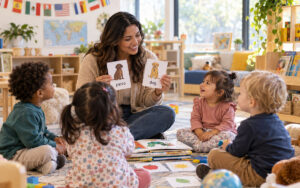
Rather than seeing curiosity as something to control, Montessori classrooms view it as one of the most valuable tools for learning. We intentionally design carefully prepared environments, hands-on experiences, and child-centered instruction to encourage exploration and independent discovery.
Understanding the Montessori classroom benefits allows parents and educators to appreciate the unique learning environment that fosters a child’s natural curiosity.
At KV Montessori, teachers do not treat curiosity as a distraction from learning. It is the foundation of learning itself. Children are encouraged to investigate ideas, ask questions, make discoveries, and develop confidence through meaningful experiences that inspire excitement about the world around them.
“A curious child becomes an engaged learner, and engaged learners develop a lifelong love of discovery.”
Why Curiosity Matters in Early Childhood Development
Curiosity is much more than simply asking questions. It is one of the driving forces behind cognitive, emotional, and social development during early childhood.
When children are curious, they become active participants in learning. Instead of passively absorbing information, they seek understanding, experiment with ideas, and develop problem-solving skills through firsthand experiences.
Research consistently suggests that children who maintain strong curiosity often demonstrate higher engagement, stronger critical thinking skills, and greater motivation to learn. Curiosity can also support resilience because children become more willing to try unfamiliar tasks and explore solutions when challenges arise.
During the early years, curiosity helps children:
- Strengthen language development through questioning and conversation
- Build problem-solving and reasoning skills
- Improve focus and concentration
- Increase motivation to learn independently
- Develop confidence through exploration
- Strengthen memory and long-term understanding
Young children naturally want to understand how the world works. A classroom environment that encourages questions and exploration can help nurture this instinct rather than suppress it.
At KV Montessori, we support children in ways that encourage wonder, observation, and active participation, helping them become enthusiastic learners who enjoy discovery.
Montessori Environments Are Designed for Exploration
One of the reasons Montessori classrooms encourage curiosity so effectively is that they intentionally prepare the environment to inspire exploration.
Unlike traditional classrooms, which may limit activities to teacher instruction, Montessori environments carefully organize purposeful materials that invite children to investigate independently.
Everything in the classroom has a place, a purpose, and a developmental goal.
Children are free to explore thoughtfully prepared learning materials that support areas such as the following:
- Language development
- Mathematics
- Science exploration
- Sensory experiences
- Practical life skills
- Geography and cultural learning
- Fine motor development
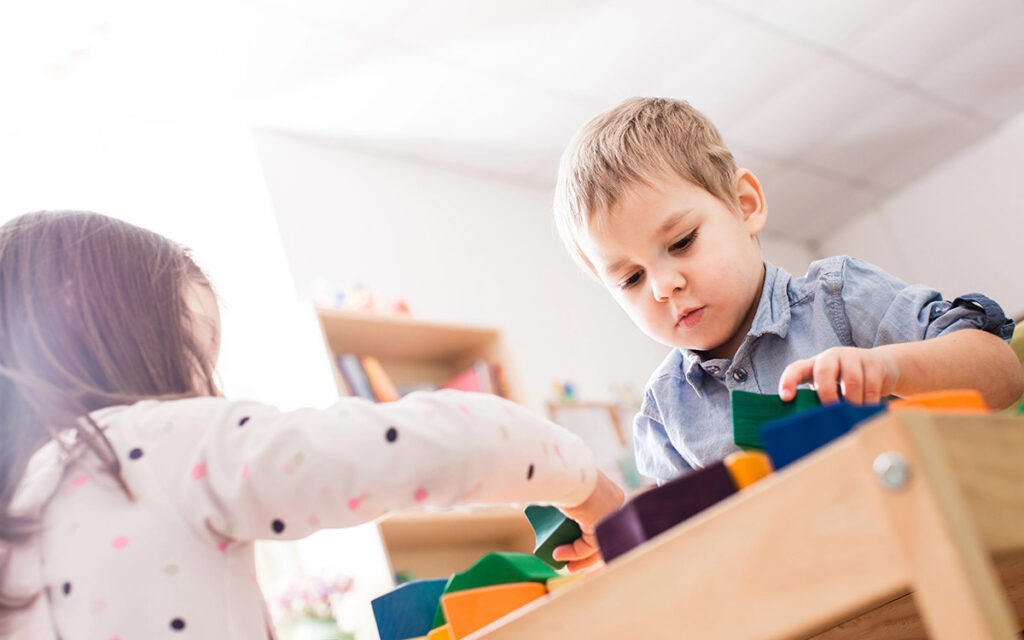
Rather than simply listening to lessons, children interact with materials physically. They touch, sort, organize, compare, observe, and repeat activities until understanding develops naturally.
For example, a child exploring sensory materials may begin asking questions about texture, size, shape, or pattern. A science activity may inspire curiosity about animals, weather, or nature. Practical life activities often spark independence and problem-solving.
Importantly, Montessori classrooms allow children time to explore deeply. Instead of rushing from one activity to another, children often revisit materials repeatedly, strengthening understanding and maintaining enthusiasm.
This environment communicates something important to children: your curiosity matters.
At KV Montessori, we thoughtfully prepare classrooms to create calm, engaging spaces where exploration feels exciting, safe, and meaningful.
“When children are given the freedom to explore meaningful experiences, curiosity grows naturally.”
Freedom Within Structure Encourages Discovery
Montessori education is often described as offering freedom within structure, and this balance plays an important role in nurturing curiosity.
Children benefit from having choices, but unlimited freedom without guidance can sometimes feel overwhelming. Montessori classrooms provide clear expectations and routines while also giving children opportunities to follow their interests.
For example, children may choose which activities to work on during designated learning periods. One child may become deeply interested in language materials, while another spends extra time exploring science concepts or sensory activities.
This ability to follow interests often increases motivation because children feel personally invested in what they are learning.
Instead of being told exactly what to think or how to complete every task, children are encouraged to experiment, observe, and discover solutions independently. Teachers guide the process gently, offering support without taking over the learning experience.
This approach helps children become:
- More independent thinkers
- Stronger problem-solvers
- More willing to ask questions
- More comfortable trying new things
- More confident in their abilities
Perhaps most importantly, children begin viewing learning as something enjoyable rather than stressful.
At KV Montessori, teachers recognize that meaningful curiosity often develops when children feel trusted to explore ideas in a supportive environment.
Hands-On Learning Makes Curiosity Meaningful
Children often learn best when they can physically engage with ideas.
Hands-on learning plays a major role in keeping curiosity alive because it transforms learning into something children can experience rather than simply memorize.
For example, a child learning about numbers may count physical objects rather than only looking at worksheets. A science lesson may involve observing plants or sorting natural materials. Language learning may include tracing letters, matching sounds, or using tactile materials.
These sensory experiences make learning feel more real and engaging.
When children can touch, move, build, sort, and experiment, they often ask more profound questions and stay engaged longer. Curiosity becomes active instead of passive.
Montessori materials are intentionally designed to encourage independent discovery. Many activities include built-in opportunities for self-correction, allowing children to identify mistakes and try again without fear of failure.
This process teaches children an important lesson: mistakes are part of learning.
As children gain confidence through exploration, they often become more comfortable taking intellectual risks and pursuing new interests.
At KV Montessori, hands-on experiences are used every day to help children connect ideas, ask questions, and develop a strong sense of curiosity about the world.
Teachers Guide Rather Than Control the Learning Process
Another reason Montessori classrooms effectively nurture curiosity is the unique role teachers play.
In traditional educational environments, teachers are often responsible for directing nearly every aspect of learning. While guidance is important, too much direct instruction can sometimes limit opportunities for children to think independently.
Montessori teachers take a different approach.
Rather than controlling every activity, teachers carefully observe children, prepare engaging environments, and introduce lessons based on readiness and interest.
This allows curiosity to develop more naturally.
Instead of immediately providing answers, Montessori teachers may encourage children to investigate, reflect, and experiment.
For example, if a child asks a question about nature, a teacher might guide them toward observation, books, or hands-on activities that help them discover answers themselves.
This process helps children strengthen confidence and critical thinking skills while reinforcing the idea that questions are valuable.
At KV Montessori, teachers act as thoughtful guides who nurture curiosity while supporting emotional growth, independence, and meaningful exploration.
Why Curiosity Matters for Lifelong Learning
Curiosity developed during early childhood often extends far beyond the classroom.
Children who feel encouraged to ask questions and explore ideas are often more motivated learners as they grow older. They may become more willing to try new experiences, seek answers independently, and approach challenges with confidence.
Curious learners are often more likely to:
- Stay engaged academically
- Build stronger critical thinking skills
- Develop problem-solving abilities
- Show greater creativity
- Adapt more comfortably to challenges
- Enjoy learning for its own sake
Montessori education supports this goal by helping children build positive relationships with learning early in life.
Rather than focusing only on performance or memorization, Montessori classrooms help children discover that learning can feel exciting, meaningful, and empowering.
At KV Montessori, fostering curiosity means helping children develop the confidence and excitement to continue learning throughout their lives.
Frequently Asked Questions
How does Montessori encourage curiosity?
Montessori classrooms encourage curiosity through hands-on materials, child-led learning, independent exploration, and environments designed to inspire discovery.
Why is curiosity important in early childhood?
Curiosity supports cognitive growth, problem-solving, creativity, confidence, language development, and motivation to learn.
Are Montessori classrooms structured?
Yes. Montessori classrooms have routines and expectations, but children are given meaningful freedom to explore activities within a prepared environment.
Can curiosity improve academic success?
Yes. Curious children often stay more engaged in learning, ask more profound questions, and develop stronger critical thinking and problem-solving skills.
Help Your Child Explore, Learn, and Grow at KV Montessori
The early years are filled with opportunities for discovery, and the right educational environment can make all the difference. A classroom that encourages curiosity helps children become more confident, independent, and excited about learning.
At KV Montessori, we support children through hands-on experiences, thoughtful guidance, and carefully prepared environments designed to inspire exploration and growth. If you are looking for an educational setting where curiosity flourishes and learning feels meaningful, KV Montessori is here to help your child thrive. Schedule a tour today and discover how Montessori education can support your child’s lifelong love of learning.